
Making Wireless IoT Project Easy, Smart, Secure.
GET A FREE SAMPLEAs drones become widely used in aerial photography, inspection, agriculture, and logistics, electromagnetic interference in flight environments is becoming an increasingly serious issue. In urban areas with tall buildings, near high-voltage power lines, around communication base stations, or even under intentional jamming attacks, GNSS signals can be easily suppressed or spoofed. This can cause positioning drift, loss of the return point, or even crashes. To tackle this challenge from the source, Skylab M&C Technology has launched the SK4A65C Compact Anti-Jamming Integrated Receiver, offering a highly integrated and powerful solution for the drone industry.
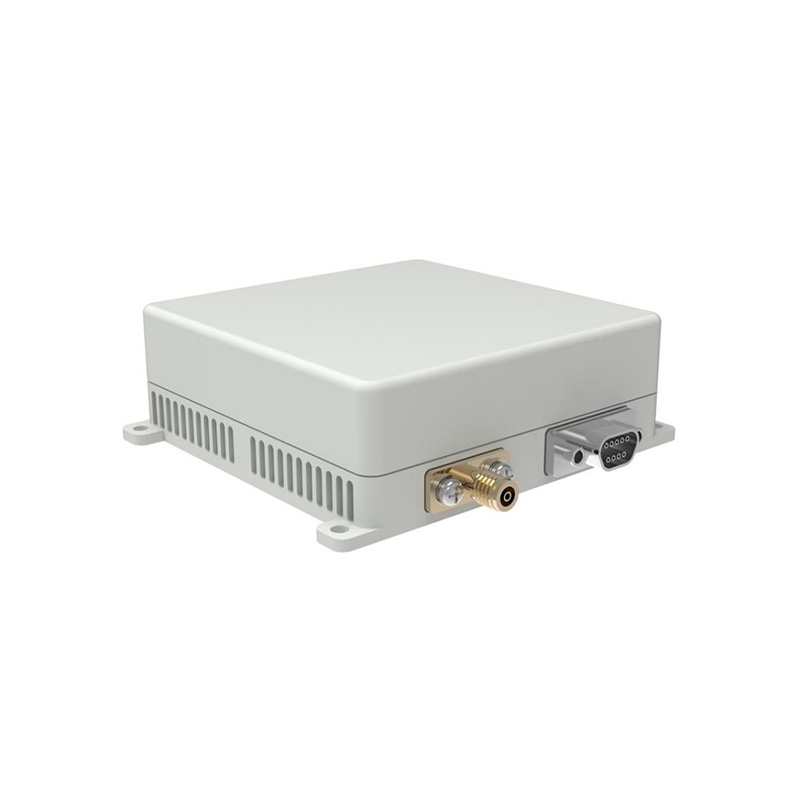
Highly Integrated, Designed for Small Platforms
The SK4A65C integrates a 4-element antenna array, RF front-end, anti-jamming processing unit, and a GNSS receiver into one compact module. Its dimensions are only 65mm × 65mm × 24mm, and it weighs less than 125g, making it ideal for size- and weight-sensitive drone platforms. The housing is matte white (customizable), which is not only aesthetically pleasing but also helps reduce heat buildup under direct sunlight. It operates on a DC 9–15V supply (12V nominal) with a power consumption of under 9W, imposing no significant burden on drone flight endurance. The operating temperature ranges from -40°C to +70°C, allowing reliable performance in extreme cold or hot environments.
Hardcore Anti-Jamming: Suppresses Up to Three Interferers Simultaneously
For drones, one of the most dangerous scenarios is encountering multi‑direction, multi‑type RF jamming during flight. The SK4A65C supports three mainstream navigation bands: BDS_B1 / GPS_L1 / GAL_E1 (1559–1580 MHz). It can handle narrowband, broadband, pulsed, swept, and combined interference. Its anti-jamming capability is particularly impressive: under a single jammer, it achieves a jammer-to-signal (J/S) ratio of 110dB (with the jammer at -130dBm). Even when three jammers arrive from different directions, it still maintains a J/S ratio of 100dB. This means the drone can lock onto reliable satellite signals even in strong interference zones, ensuring the flight controller receives accurate position and velocity information.
High-Precision Positioning for Reliable Operation
Beyond anti‑jamming, the built‑in GNSS receiver delivers solid performance. Horizontal and vertical positioning accuracy is better than 10 meters, and velocity accuracy is ≤0.2 m/s. Acquisition sensitivity is -145dBm, while tracking sensitivity reaches -160dBm, ensuring fast position fixes and continuous tracking even in weak‑signal environments. Data output supports NMEA0183 or optional UBX protocol at a default 1Hz update rate, which can be easily integrated with most flight controllers. The module also includes an SMA‑K RF connector for connecting an external receiver or outputting a combined signal, providing additional system flexibility.
Simple Electrical Interface, Easy to Integrate with Drone Flight Controllers
Drone flight controllers typically communicate with external devices via TTL serial ports. The SK4A65C uses a J30J‑9ZK power/data connector. The TXD0/RXD0 lines provide a 3.3V LVTTL serial interface (default baud rate 115200 bps) that can be directly connected to a flight controller to obtain positioning data. An additional pair (TXD1/RXD1) is reserved for debugging the internal anti‑jamming unit and is not needed for normal operation. Power and ground pins are clearly marked, making field deployment very straightforward.
Conclusion: Let Your Drone Fly with Confidence
In today’s increasingly complex electromagnetic environment, relying on ordinary GNSS antennas is no longer sufficient for high‑reliability drone operations. The SK4A65C Compact Anti‑Jamming Integrated Receiver combines a 4‑element antenna array with adaptive nulling processing, delivering triple‑jammer suppression and a J/S ratio of up to 110dB in a compact form factor. Whether an industrial drone is inspecting power lines near high‑voltage cables or a security drone is operating in a dense signal environment, this product significantly improves positioning and navigation resilience, reducing flight risks.
Prev:Smart Warehouse Forklift Collision Avoidance Solution: UWB Centimeter-Level Perception
Next:SKG12MR-06A Dual-Band Full-Constellation RTK Positioning Module
Copyrights© Shenzhen Skylab Co.,LTD All Rights Reserved.


